2026-09-10 · 5 min read
What can be vinyl wrapped in your home?
Architectural vinyl is one of the most flexible finishing materials you can put in a home. It's a thin, pressure-sensitive film engineered to bond to flat, smooth, non-porous surfaces and then be heated and trimmed to shape — which means the list of things we can wrap is far longer than the list of things we can't. The simplest test is this: if a surface is rigid, smooth, and clean, a quality vinyl will usually adhere to it. If it's soft, crumbling, or shedding dust every time you touch it, nothing will stick for long — not vinyl, not paint, not much else.
Kitchens: the core of what we do
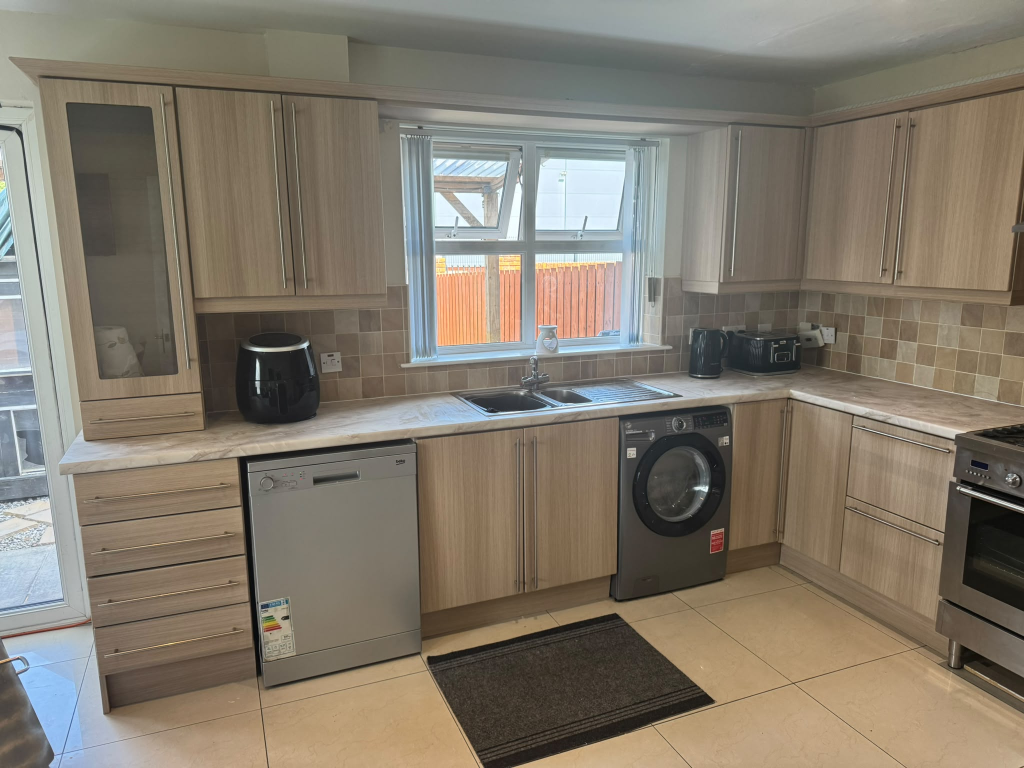
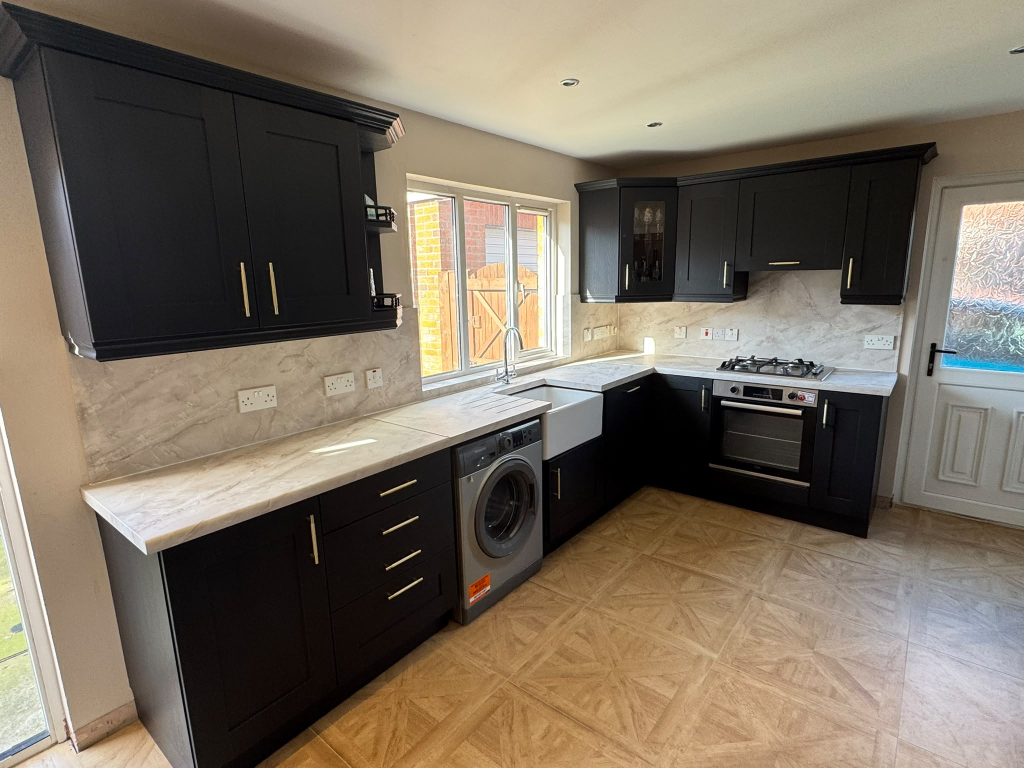
Kitchens are where architectural vinyl earns its reputation. We wrap cabinet doors, drawer fronts, end panels, pelmets and plinths — the visible faces of the units, leaving the internal carcasses, hinges and layout completely untouched. The result is a kitchen that reads as new to anyone walking into the room, achieved in days rather than the weeks of disruption a full refit brings. Worktops are a separate skill: we use heavier-duty films rated for the wear, heat and moisture a worktop takes, finished so the edge seams read as a continuous surface rather than a wrapped-on afterthought.
Beyond the kitchen
The same film that transforms a kitchen works across the rest of the house. We regularly wrap bedroom and living-room furniture — wardrobes, bedside lockers, display units and sideboards — along with internal doors, skirting, stair stringers and even UPVC window frames where a colour change is wanted without replacing the whole frame. In bathrooms, the humidity rules out some surfaces, but vanity units and splashback panels are fair game when prepped properly. For commercial clients — cafes, salons, retail counters and offices — vinyl is a fast way to rebrand or refresh fitted fixtures without closing the premises for a refit.
Where vinyl isn't the right answer
The honest exclusions matter as much as the possibilities. Vinyl won't rescue water-swollen or structurally failed carcasses, and it can't follow deeply textured, distressed or flaking surfaces — the film simply mirrors every imperfection beneath it. Ceilings and floors take loads and movement that a wrap isn't designed for, and anything that gets hotter than the film's rated limit (an oven door directly above the heating element, for example) is out. In every case we'll tell you up front which surfaces will hold a wrap for years and which ones won't — that honesty is the difference between a wrap that lasts and one that's regretted.
If you're unsure whether a particular surface is wrappable, send us a photo. We'll give you a straight answer and, where it makes sense, a fixed quote — covering Belfast, Lisburn, Bangor, Newtownards, Newry and the rest of County Down.